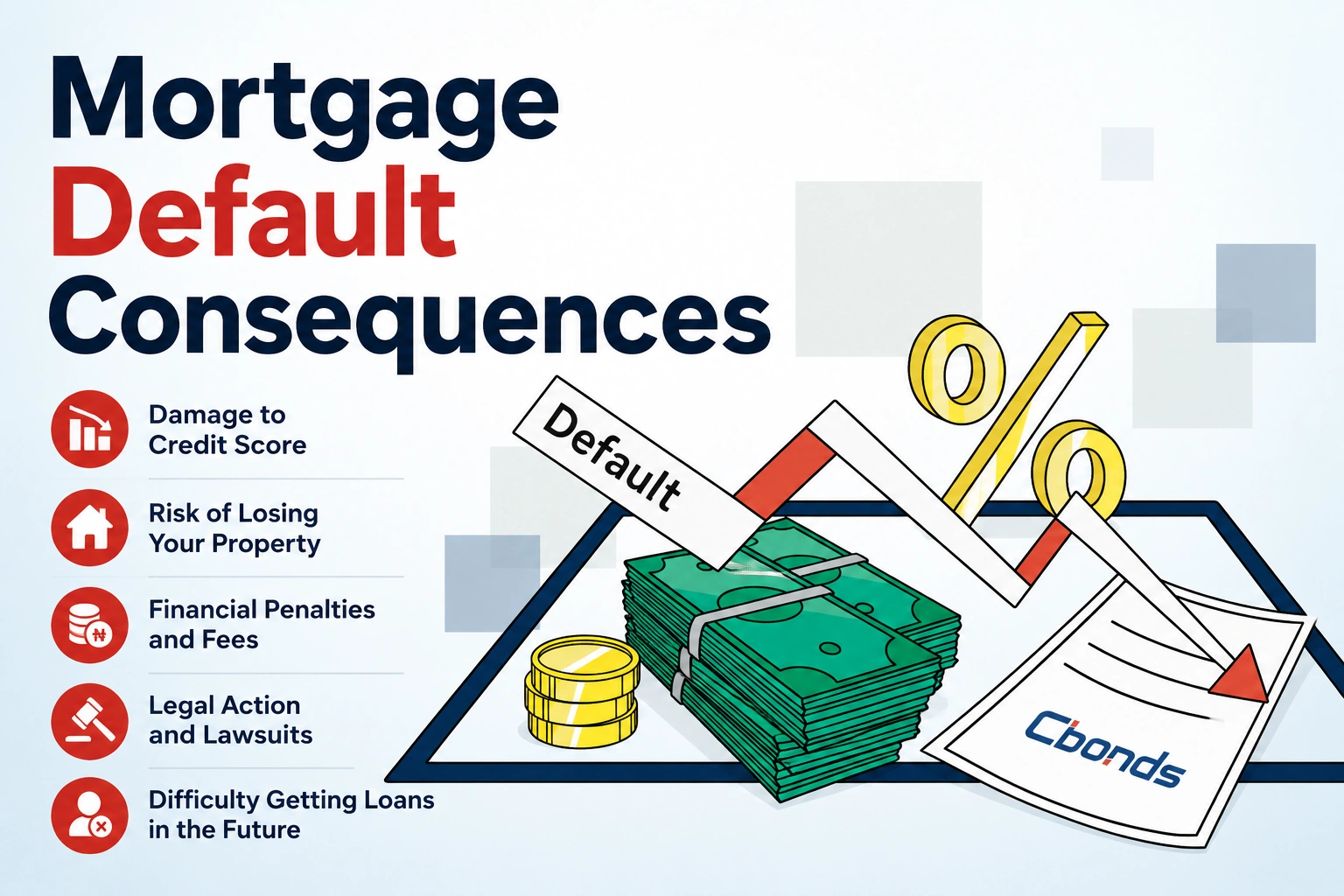
Mortgage Default Consequences in Nigeria
If you have a mortgage loan in Nigeria and you are finding it hard to keep up with your monthly repayments, this article is something you need to read before things go from bad to worse.
A lot of Nigerians enter mortgage agreements without fully understanding what the lender can do to them if they cannot completely pay off the loan.
They sign the documents, move into the property and start paying as previously agreed but the moment things get tough financially, they start missing the monthly payment windows without knowing the full weight of what is coming next.
This article will walk you through everything that will likely happen to you when you default on a mortgage loan in Nigeria.
How Serious is Mortgage Default in Nigeria?
Very serious! In fact, mortgage default in Nigeria is not something lenders treat lightly and it is not something you should treat lightly either.
When you take a mortgage loan, you are entering a legally binding agreement with the lender. You are telling them that you will surely pay the agreed stipulated monthly amount every month for the number of agreed years.
Remember that in mortgage, the property itself is usually the collateral and that the lender holds your title documents until you finish repaying.
So when you stop paying, you are breaching a legal contract that has serious consequences attached.
At that point, the lender has rights under that contract and under the Nigerian law and they will exercise those rights if you push them to that point.
At What Point Does a Mortgage Become a Default?
It is important to understand this clearly, missing the payment for just one month does not automatically mean you have completely defaulted.
Gracefully, most mortgage banks in Nigeria will contact you if you miss the payment for any month to find out what is going on.
Some will give you a short window to make up the payment before they take any further steps.
But if you miss two or three consecutive payments without any communication or arrangement with your lender, the lender will have no other option than to formally declare you a defaulter.
While some lenders trigger this at 30 days of non-payment, others may wait until 60 or 90 days depending on what your loan agreement says.
Once you are formally declared a defaulter, the loan recovery process may take its full course using legal procedures in accordance with the terms of your contract and the Nigerian mortgage law.
What Your Lender Can Legally Do to You?
Before we go into each consequence in detail, there are a lot of things your lender can do to you legally if you default your mortgage loan contract including:
- Charges for penalties
- Extra interest charge on every day that the debt remains unpaid
- Sending you formal demand letters
- Taking you to court
- Foreclosing of the property
- Auctioning of the property
- Going after other of your assets
- Demanding for additional payments for damages
- Reporting you to the credit bureau
Let’s discuss all of these in details below.
Consequences of Mortgage Default in Nigeria
Now let us go through each consequence one by one so you understand exactly what you will have to deal with.
1. Penalty Charges and Accrued Interest
Most mortgage banks in Nigeria charge penalty fees for late or missed payments. These fees are usually percentages of the overdue amount.
While some banks may charge a flat fee per missed payment others may charge daily or monthly penalties that keep adding up as long as you are still on default.
Even at that, the unpaid principal amount will still continue to attract its normal monthly interest. So your debt will keep growing.
2. Formal Demand Letters
If the lender cannot resolve the issue with you informally after the first missed payment or two, they will move to formal demand letters.
A demand letter is a legal document that will state clearly that you are in default, it will show the exact amount you owe at that point including all penalties and accrued interest, and it will give you a deadline to either pay in full or come in and make a formal arrangement with the bank.
Most demand letter will give the borrower between 30 to 60 days to respond but once it passes without any response or payment from you, the lender will move to the next step which will be much harder for you to deal with.
3. Legal Action and Court Proceedings
If the deadline of demand letter passes and there is still no payment and no communication from you, the mortgage bank will take a legal action against you.
At this point, they may file a case in court to enforce the mortgage agreement and recover the full outstanding debt.
So you will need to hire a lawyer at this stage and your financial information will serve as part of evidence in the court.
Note: In most cases, the court usually rules in favour of the lender because you signed a contract and you did not honour it.
A court judgement against you will order you to pay the full outstanding amount including the original debt, all penalties, all accrued interest and the legal costs the bank incurred in taking you to court.
4. Foreclosure of the Property
Foreclosure is when the mortgage bank takes legal possession of your property and sells it to recover the money you owe.
Remember that when you took the mortgage, the property was the collateral and the lender has been holding your title documents since day one.
So if you default and refuse to respond to demand letters and the matter goes to court, the lender can get the legal authority to sell that property.
This process is governed by the Land Use Act of 1978, the Mortgage and Foreclosure Act and also other various state-level laws in Nigeria.
At this point, the bank may advertise the property, usually for a public auction, and sells it to the highest bidder to recover their money.
The proceeds from that sale will be used to settle your outstanding loan balance, cover the penalties incurred, interest, legal fee and any other auction expenditures. Any money left as balance after all of that, will come back to you.
But if the property sells lesser than what you owe, you will still have to pay the bank the remaining balance.
5. Seizure of Other Assets
If the sale of the foreclosed property does not fully cover what you owe, the lender can go after your other assets.
A court judgement in favour of the mortgage bank gives them the legal authority to enforce that judgement against any valuable thing you own.
This can include your bank accounts, other properties, vehicles or any other assets that can be used to settle the remaining debt.
This is how some people end up losing far more than what they bargained for.
6. Loss of Every Payment You Have Ever Made
This is one of the hardest consequences. When a property is foreclosed and sold, you will not get back any of the payments you have already made, not even the equity contribution.
For example, if you took a 20 year mortgage and paid faithfully for 8 years before you defaulted and eventually lost the property, you walk away with nothing to show for those 8 years of payments.
7. Serious Damage to Your Credit Record
A mortgage default will leave a negative mark on your credit record.
When you default, it will be likely reported to the major credit bureaus in Nigeria including CRC Credit Bureau, FirstCentral Credit Bureau and CR Services Credit Bureau.
This will cause your credit score to drop significantly and any lender who checks your credit record in the future will see that defaulted a loan and this will make it difficult for you to get a loan in the future.
8. Emotional Impact
If you and your family were living in the mortgaged property and it gets foreclosed, court will issue an order for you and your family to move out of the property.
Beyond the physical displacement, the financial pressure and uncertainty of dealing with a mortgage default can take a toll on your family relationships.
The stress, the arguments, the shame and the fear of losing the home may all add up and start affecting everyone emotionally.
What to Do to Help Yourself Out?
If you are reading this and you are currently finding it hard to keep up with your mortgage payments, here is what you should do right now.
1. Go to your lender before they come to you.
The moment you know you are going to miss a payment, go to the bank and explain your situation.
2. Ask about restructuring your loan.
Your lender may be willing to extend your tenure which will bring down your monthly payment, or give you a short repayment break while you get back on your feet.
3. Consider selling the property yourself.
If you genuinely cannot continue the mortgage, selling the property on your own terms before foreclosure happens is a much better outcome. You have more control over the price and you are more likely to get a value that fully settles the debt and possibly leaves you with something reasonable.
4. Get a lawyer involved early
If the bank has already started formal proceedings, speak to a lawyer who understands mortgage law in Nigeria before you respond to anything. Don’t ignore letters or notices from your lender.
Conclusion
The consequences of mortgage default in Nigeria is far beyond just losing a property. From the moment you miss your first repayment, the penalties will start piling up and if you fail more, you’ll lose much more than the property itself.